LAKOS and AZUD Filtration Deliver Clearer Water and More Efficient Cooling at a Lobster Pound

Two-Stage Seawater Filtration Improves Water Quality and Cooling Efficiency
Seawater intake treatment at an Eastern Canadian lobster pound
The Challenge
An Eastern Canadian live lobster pound was experiencing poor water clarity and reduced cooling efficiency as sediment, weeds and biological matter entered through its seawater intake. The existing pool sand filters were not removing enough contaminants, contributing to frequent water changes. The facility needed continuous filtration to help maintain clean holding tank water at approximately 4°C.
The Solution
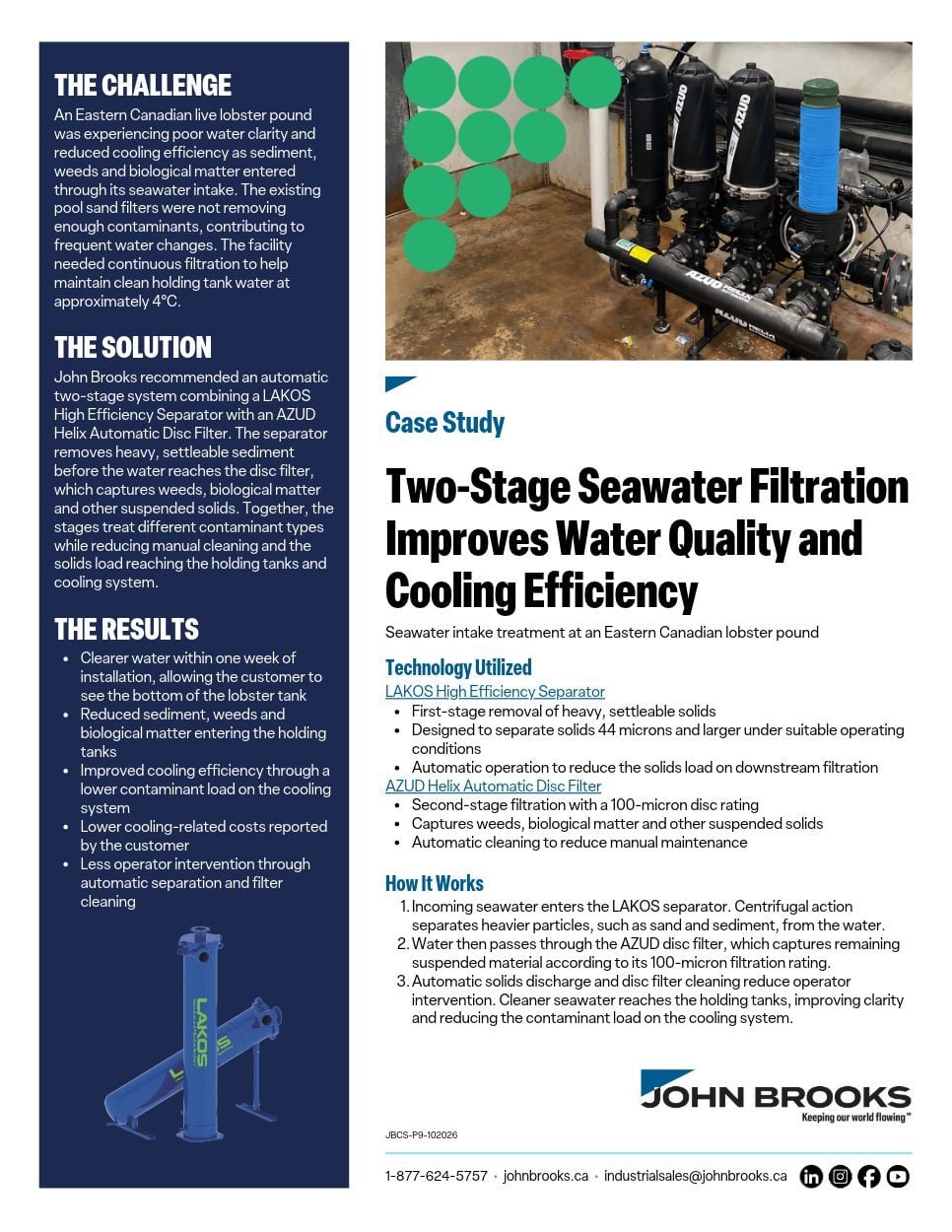
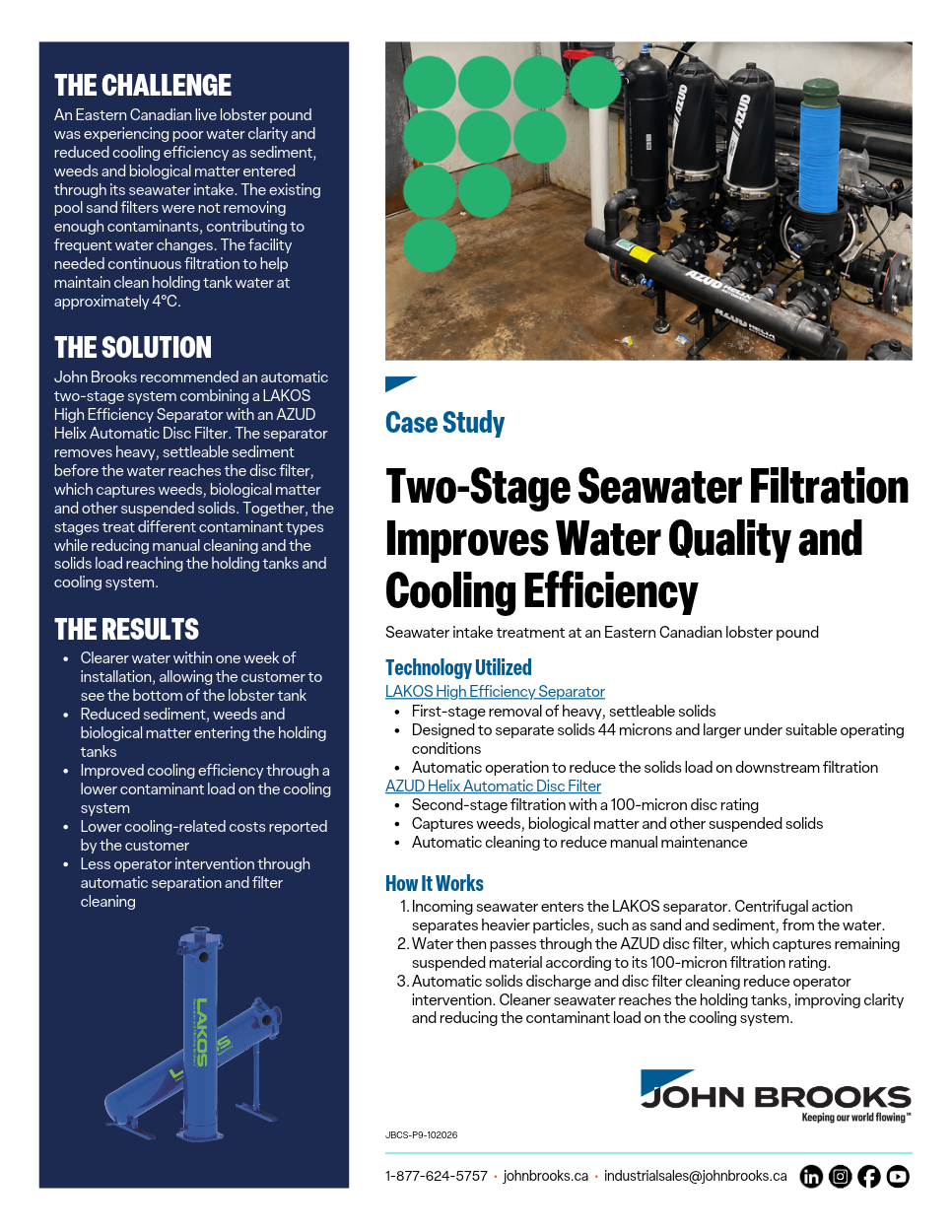
John Brooks recommended an automatic two-stage system combining a LAKOS High Efficiency Separator with an AZUD Helix Automatic Disc Filter. The separator removes heavy, settleable sediment before the water reaches the disc filter, which captures weeds, biological matter and other suspended solids. Together, the stages treat different contaminant types while reducing manual cleaning and the solids load reaching the holding tanks and cooling system.
The Results
- Clearer water within one week of installation, allowing the customer to see the bottom of the lobster tank
- Reduced sediment, weeds and biological matter entering the holding tanks
- Improved cooling efficiency through a lower contaminant load on the cooling system
- Lower cooling-related costs reported by the customer
- Less operator intervention through automatic separation and filter cleaning
Technology utilized
LAKOS High Efficiency Separator- First-stage removal of heavy, settleable solids
- Designed to separate solids 44 microns and larger under suitable operating conditions
- Automatic operation to reduce the solids load on downstream filtration
AZUD Helix Automatic Disc Filter
- Second-stage filtration with a 100-micron disc rating
- Captures weeds, biological matter and other suspended solids
- Automatic cleaning to reduce manual maintenance
How It Works
- Incoming seawater enters the LAKOS separator. Centrifugal action separates heavier particles, such as sand and sediment, from the water.
- Water then passes through the AZUD disc filter, which captures remaining suspended material according to its 100-micron filtration rating.
- Automatic solids discharge and disc filter cleaning reduce operator intervention. Cleaner seawater reaches the holding tanks, improving clarity and reducing the contaminant load on the cooling system.